Cosmology

What Does the Glow of Black Holes Tell Us About Space?

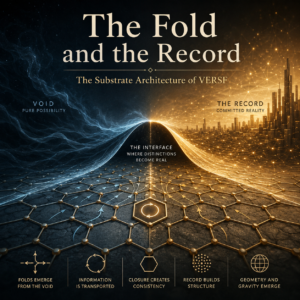
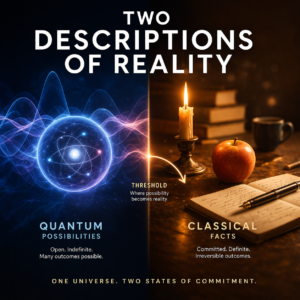
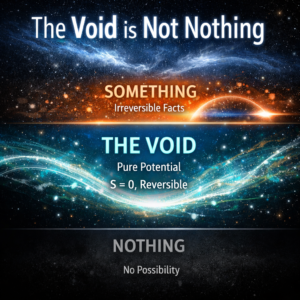
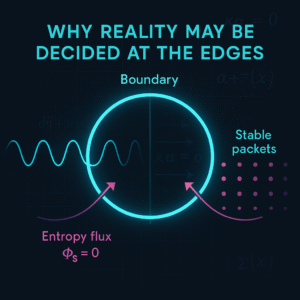
Why Reality Needs a Void to Produce Facts

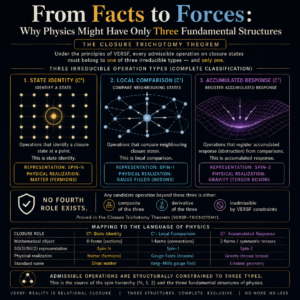
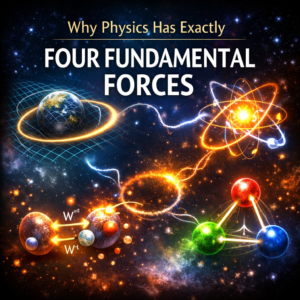
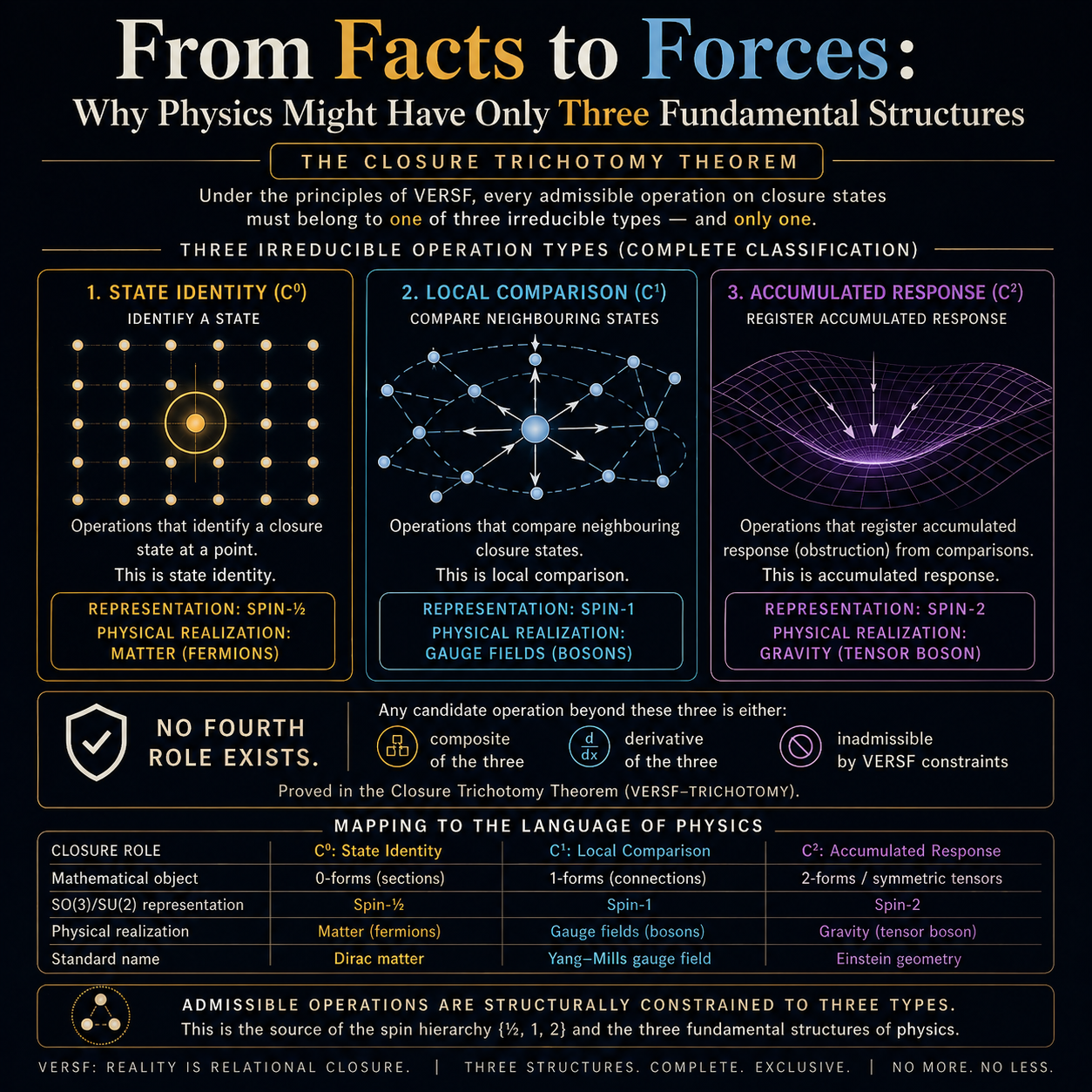
Why Physics Has Exactly Four Fundamental Forces

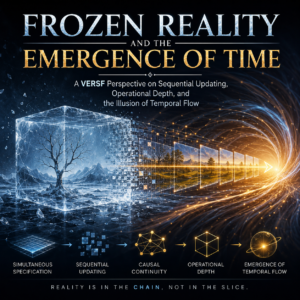
A World Without Years

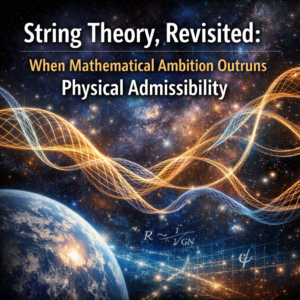
String Theory, Revisited: When Mathematical Ambition Outruns Physical Admissibility

The Physical Admissibility Framework (PAF): Finite Distinguishability, Irreversible Commitment, and the Cost of Facts

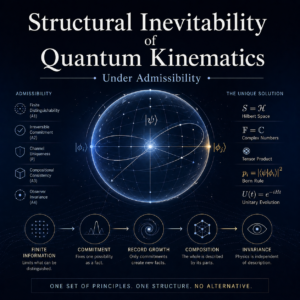
Quantum Mechanics as Admissibility Fixed Point

The Hamiltonian as an Admissibility Generator in VERSF

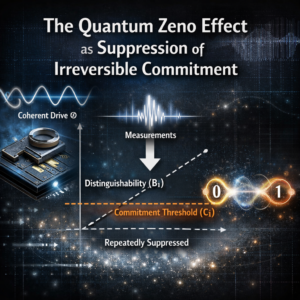
Measurement as Commitment: Why Quantum Systems Are Relational

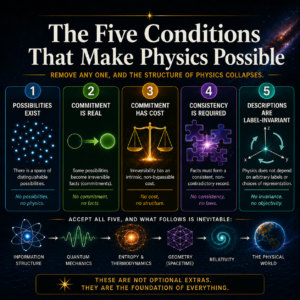
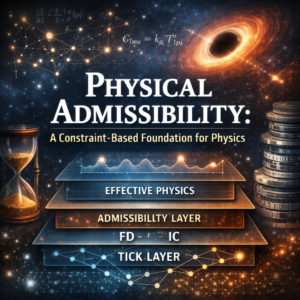
Physical Admissibility: A Constraint-Based Foundation for Physics

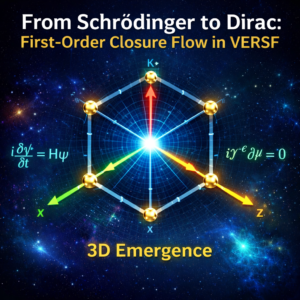
From Schrödinger to Dirac: First-Order Closure Flow in VERSF

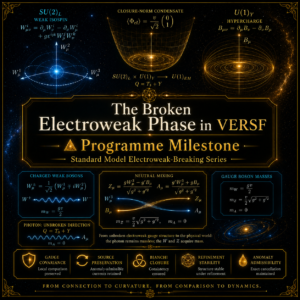
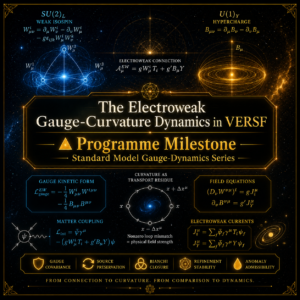
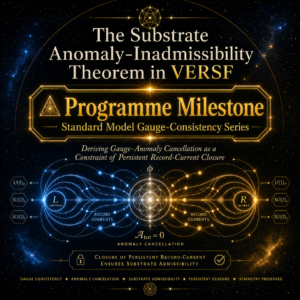
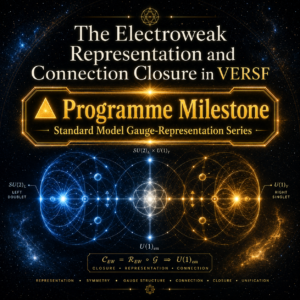
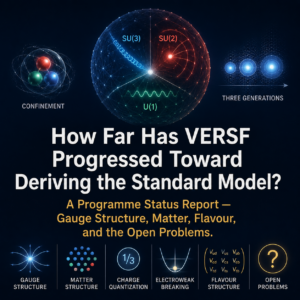
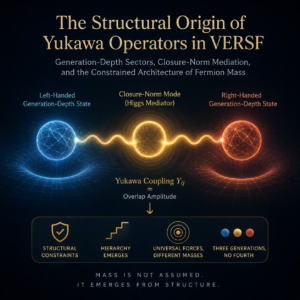
Why the Standard Model Might Not Be Arbitrary After All

Constraint-Defined Geometry and Emergent Time

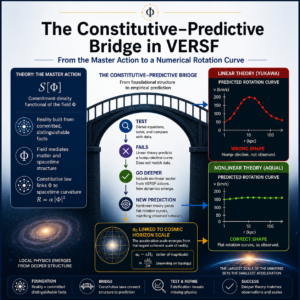
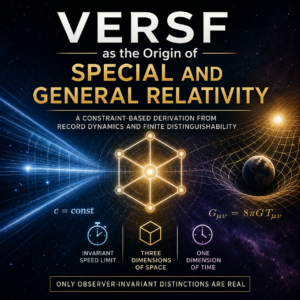
Gravity as Critical Entropic Back-Pressure

×
File 1
Main Paper
File 2
This paper clarifies the internal structure of the BCB–VERSF research programme. Multiple papers within the programme employ different formalisms—conservation laws, capacity constraints, measurement dynamics, and effective field descriptions. The purpose of this paper is to make those levels explicit, to state clearly which claims belong to which layer, and to articulate the meta-theoretic status of the foundational constraint.
File 3
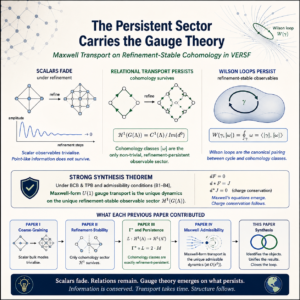
This paper provides a clear, explanatory overview of how the main papers in the BCB–VERSF research programme relate to one another.
View

Quantum Computation Reinterpreted: Delayed Distinguishability and Competitive Bit Formation

Distinguishability: The Missing Constraint in Modern Science

Why the Riemann Hypothesis Is Really About Infinite Distinguishability

×
File 1
Main Paper
File 2
Supplementary Paper
View

Reality as a Runtime Programme — and Universal Constants as Its Parameters

×
File 1
Main Paper
File 2
Summary Paper for General Reader
View

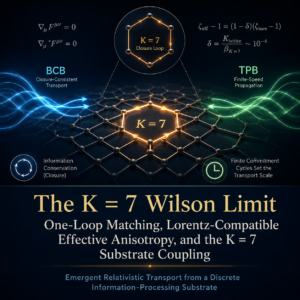
Bringing Together VERSF, BCB and TPB frameworks

Rethinking the Big Bang: A Universe Built from Information, Not Spacetime

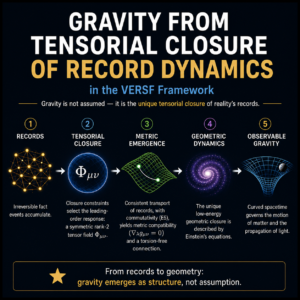
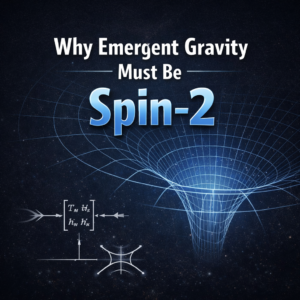
Why Emergent Gravity Must Be Spin-2

Why the Bit–Tick Framework Isn’t One Idea Among Many and Why the Axioms Must Hold

×
File 1
Uniqueness of the Bit Tick Framework
File 2
Emprical Status of Axioms
View

Dimensional Emergence Calculus

Why This Canon Document Exists

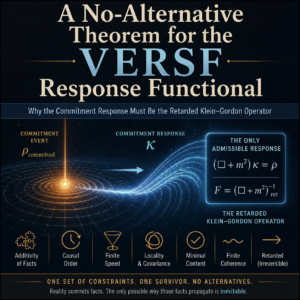
Why We Need New Field Equations If Gravity Comes from Information

It isn’t actually a Giant Computer but its laws are those of optimal computation.

Towards a Complete Information-Theoretic Physics: Closing the Remaining Gaps

×
File 1
Main Full Paper
File 2
Summary Paper
View

Why Quantum Randomness Might Be an Illusion!

Complex Hilbert Space from Distinguishability Principles

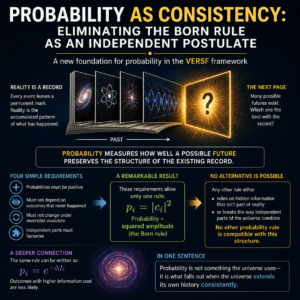
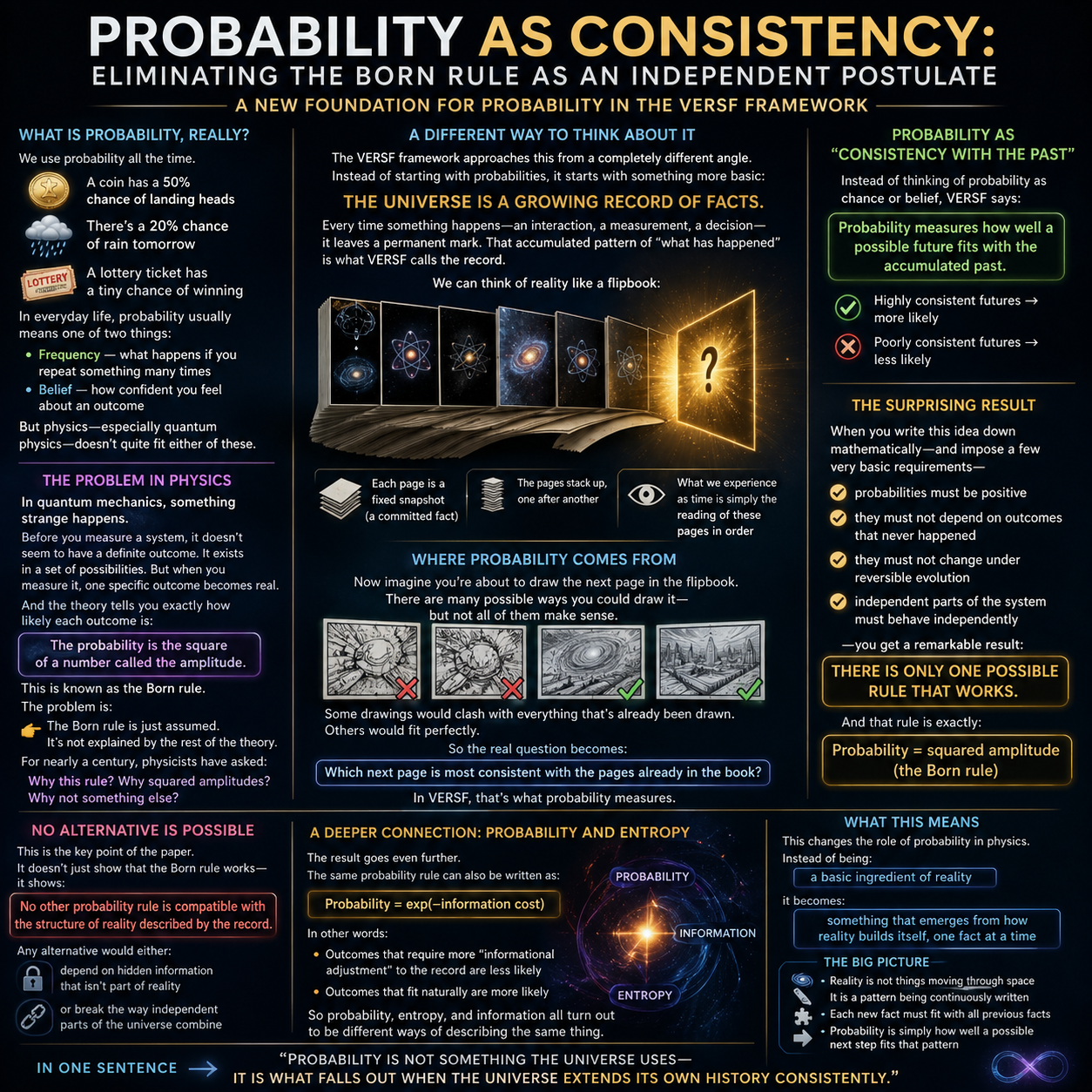
The Double Square Rule: Why Quantum Probabilities Had to Be Squared All Along – A Born Rule Derivation.

Why Time as a Dimension Is Holding Physics Back

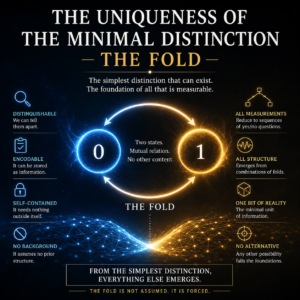
One Fold: Deriving Fundamental Physics from a Single Unit of Distinguishability

When Time Only Ticks With Change: Rethinking the Three-Body Problem Through Information

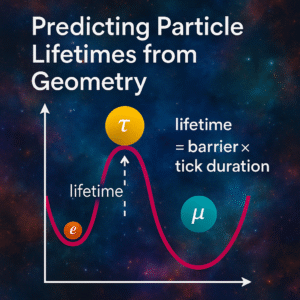
How a Simple Geometric Idea May Explain Why Particles Decay at the Speeds They Do

Why Physics Requires a Void

The Universe Runs on Ticks: A New Way to Understand Time and Entropy.

Introducing the Ticks-Per-Bit Framework

The First Lagrangian for BCB

Deriving the Proton Mass: Why It Matters!

The Invisible Structure That Shapes the Baryon Mass Spectrum

×
File 1
Main Paper
File 2
General Reader Summary
View

Why Our Universe Has Exactly Three Dimensions — And Why It Couldn’t Be Any Other Way

From Bit Conservation to Gravity: A Unified Explanation

BCB and the Uniqueness of Quantum Mechanics: A Multi-Path Derivation

How “From Conservation to Geometry” Strengthens the Case for BCB

From Bits to Reality: The Blueprint Beneath Quantum Mechanics

From Entropy to Information: The Next Step in Understanding Reality

×
File 1
Main Paper
File 2
Summary Paper
View

The Geometry Beneath Quantum Mechanics

From Geometry to Arithmetic: Extending the VERSF Program into Algebra

From the Geometry of the Universe to the Geometry Within It

The Geometry Beneath Reality – One To Read!

×
File 1
Main Paper
File 2
Why the Void Creates Difference
View

The Universe’s Idle-Rev Limit

Binary Foundations of Physical Reality — A Universe That Thinks in Bits!

Unifying Feynman, Schrödinger, and Quantum Computing: The Hidden Language Beneath Reality

From Paths to Folds: Cracking the Code Beneath Reality

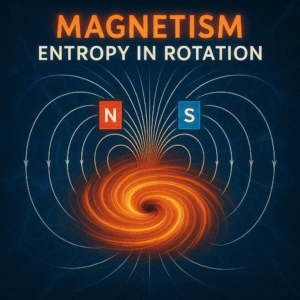
Magnetism: The Swirl Beneath the Field

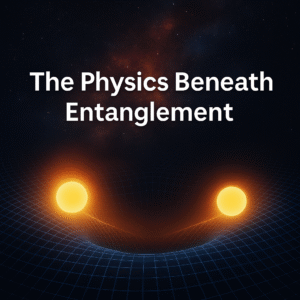
The Physics Beneath Entanglement: Searching for the Void-Space Interface

The Breaking Point of the Fabric of Space

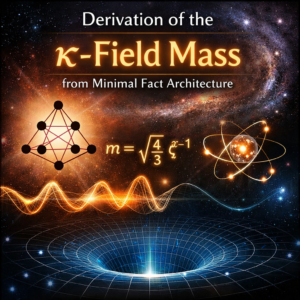
Why Anything Has Mass

Why Time Travel Is Impossible (and Why That’s Beautiful).

The Hidden Fifth Element of Reality

Entropy Quanta and Physical Unfolding

Entropic Foundations of the Born Rule

The Edge of Time and deriving the Born Rule.

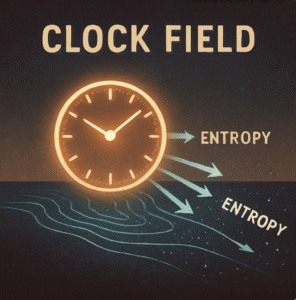
Entropy Is the Field Beneath Spacetime

×
View

From Map to Mechanism: Why Spacetime Must Flow!

The Map, Not the Machinery? GR as Geometric Constraint

What If the Universe Is a Hall of Mirrors?

×
File 1
Main Paper
File 2
Summary Paper
View

Where Reality Writes Itself: Emergent Logic & Time

The Most Expensive Scandal in Physics: Dark Matter!

Beyond the Numbers: Tracking Entropy Through Alignment

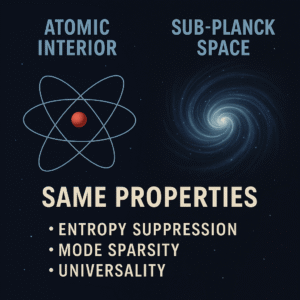
Same Rules in Two Very Different Places!

The Cosmic Shortcut: How Entropy May Have Turbocharged the First Galaxies

A Beginning and Infinity Don’t Mix!

Why Time Demands a Beginning

Neutrinos Defrag the Universe!

Does the Universe Have a Frame Rate?

The Hidden Lattice Beneath Reality

Border Control for Quantum States!

Why Physics Must Ask “Why” Again!

Entropy: The Hidden Architect of Order

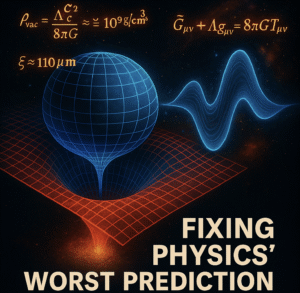
Fixing Physics’ Worst Prediction

When Space Itself Has Mass: What We Learned from the Double-Slit Experiment

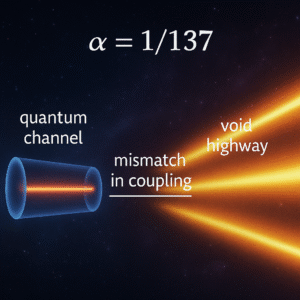
The Fine-Structure Constant: When Quantum Channels Meet the Void

×
File 1
Main Paper
File 2
Summary of Main Paper
File 3
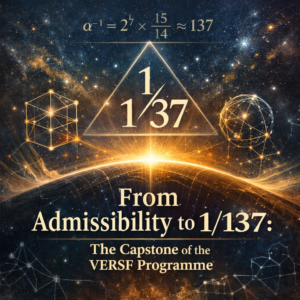
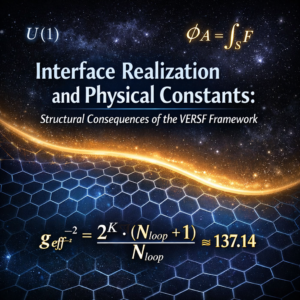
In the main paper we demonstrated that the fine-structure constant is exactly equal to an impedance mismatch between single-channel quantum transport and the two-polarization electromagnetic vacuum. That result explains what the fine-structure constant is. This paper explains why its value is close to 1/137 1/137, showing that it follows from the discrete combinatorial structure required for coherent relational configurations in the vacuum. Read together, the two papers show that α α is neither arbitrary nor fundamental, but an emergent quantity whose meaning and magnitude are both determined by vacuum structure.
View

VERSF: From Quantum Foam to Gravity: How Entropy Shapes the Universe

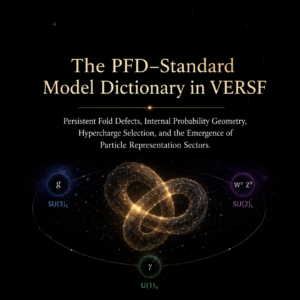
Physics Rewritten: Why the Standard Model Works – and What It’s Been Hiding

×
File 1
Main Document
File 2
Summary Document
View

Quantum Foam: The Flickering Boundary Between Possibility and Reality

×
File 1
Main Paper
File 2
Summary Paper
View

When Time Switches On: How Information Creates the Flow of Moments

The Information Engine: Why the Universe Runs Like a Perfect Computer

×
File 1
Summary Paper
File 2
Main Paper
View

The φ-Field as the Game Engine of Reality

×
File 1
Full Paper
File 2
Summary
View

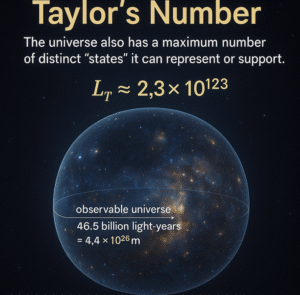
The Stable Pattern Number: Has the Universe Hit Its Creative Limit?

×
File 1
Full Paper
File 2
Summary Overview
View

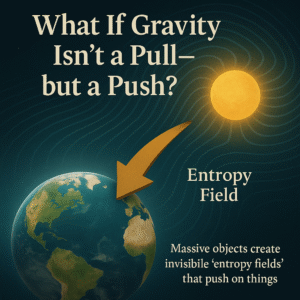
What If Gravity Isn’t a Pull—but a Push?

What If Time Isn’t What We Think It Is?

The Computational Boundary of Physical Reality

Beneath Time – The Superposition Foundation of Reality

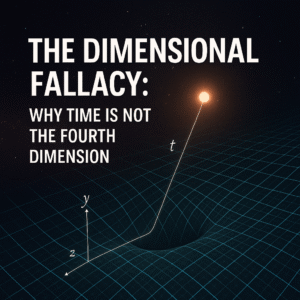
The Dimensional Fallacy: Why Time Is Not the Fourth Dimension

Introducing VERSF

All research papers and documents are licensed under a Creative Commons Attribution 4.0 International License.
Please credit the source when quoting or reusing.